UNESCO CHAIR For Inter-Religious Dialogue Studies in The Islamic World
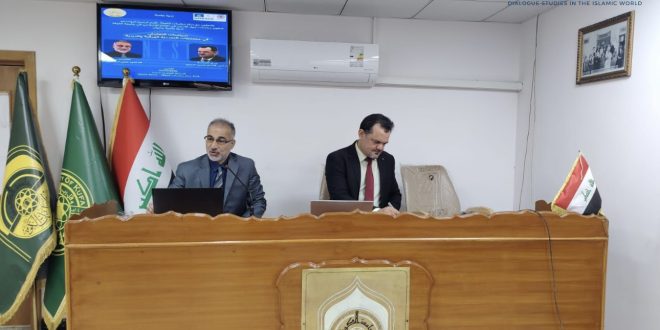
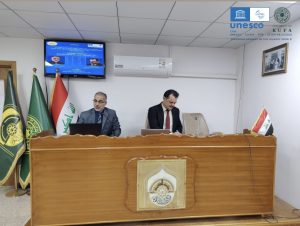
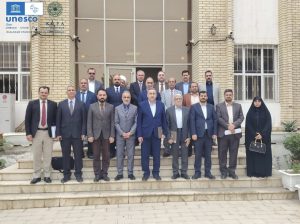
In collaboration with the Center for Kufa Studies, the UNESCO Chair for Dialogue convened an academic symposium entitled “Policies of Coexistence in Ethnically and Religiously Plural Societies.” The event hosted the Iraqi writer and researcher Dr. Maki Keshkoul, who spoke on the policies adopted by migrant-receiving nations in general—and Australia in particular—to curb manifestations of racial intolerance and religious extremism, phenomena which, if left unchecked, ultimately give rise to ethnic conflicts and civil strife.
The lecturer pointed out that the most prominent of these policies began with the “White Australia Policy,” followed by the policy of assimilation or “melting pot,” which, after proving unsuccessful, gave way to the policy of integration. These were later succeeded by the policies of cultural pluralism and civic integration, the latter implemented in more implicit forms.
He then turned to the policy most suitable for application in the Iraqi context—a context wholly different from the Western settings in which the aforementioned policies had been developed. For Iraqis, despite their ethnic, religious, or sectarian differences, are bound by numerous commonalities, foremost among them the shared bond of the land itself.
It is worth noting that the symposium was moderated by Dr. Qasim Hasan Subaih, a faculty member at the Center for Kufa Studies. The event was enriched with interventions and a series of questions posed by attendees to the lecturer. It concluded with the presentation of certificates of participation and appreciation to both the speaker and the participants.