UNESCO CHAIR For Inter-Religious Dialogue Studies in The Islamic World
Basra | 10 February 2026
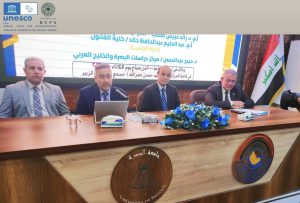
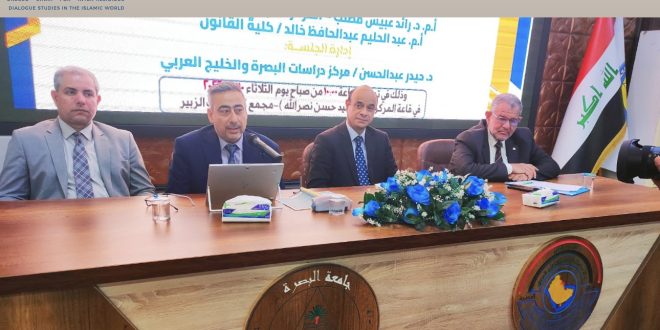
In a deliberate step toward strengthening the bonds of dialogue and coexistence, and with the participation of the UNESCO Chair at the University of Kufa, the hall of the Basra and Arabian Gulf Studies Center hosted a specialized academic symposium entitled: “The Role of Religious Institutions in Promoting Civil Peace and Combating Violent Extremism.”
The symposium emerged as the fruit of a joint scholarly collaboration between the Iraqi Center for Documenting Crimes of Extremism and the Basra Studies Center, with active contributions from distinguished academics representing the University of Basra and the UNESCO Chair at the University of Kufa.
The session featured in-depth research presentations that examined the historical and sociological dimensions of Iraqi identity. Dr. Tahseen Fadhil Abbas, a member of the UNESCO Chair at the University of Kufa, offered a historical survey of the city of Najaf and its seminary tradition, highlighting its long-standing role in embracing religious plurality. He underscored the profound legacy of peaceful coexistence within historic Najaf, particularly its enduring relationship with the Christian community and other societal components across successive eras.
Dr. Raed Abis, in turn, addressed the vital importance of cultural dialogue, emphasizing the necessity of activating the academic sphere and research centers as engines for cultivating an atmosphere of coexistence that transcends political and sectarian impediments, ultimately reinforcing the shared national fabric.
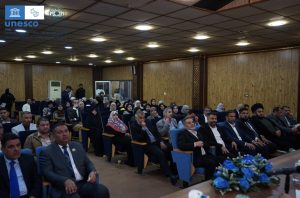
The symposium witnessed a distinguished attendance of academics, intellectuals, and religious figures. Their interventions enriched the discussion by revisiting successful historical experiences of coexistence among Iraqis, affirming that religious and sectarian diversity constitutes a “national enrichment” rather than a source of division, and stressing that cultural plurality remains the most effective conduit for communication among multiple identities.
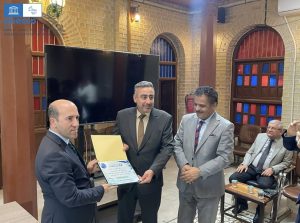
The event concluded with the mutual presentation of certificates of appreciation to the participating researchers. Attendees collectively advanced a central recommendation calling for greater openness and collaboration among Iraqi universities and research institutions, alongside the activation of the UNESCO Chair at the University of Kufa as a global platform for fostering cultural dialogue—one that aspires to sustainable societal harmony and enduring peace.