UNESCO CHAIR For Inter-Religious Dialogue Studies in The Islamic World
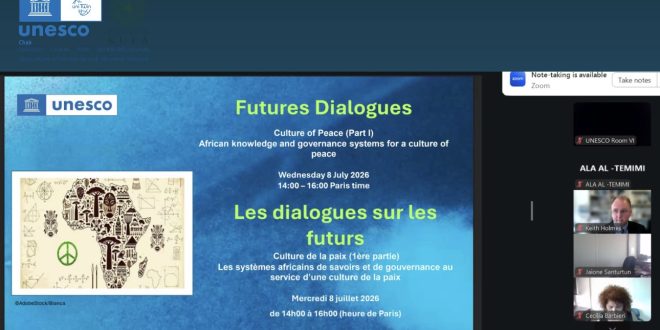
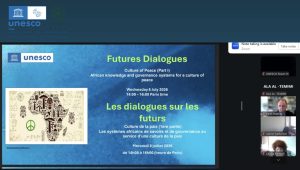
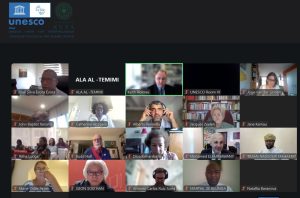
Paris — UNESCO convened a high-level virtual dialogue via Zoom entitled “Futures Literacy Dialogues: African Knowledge Systems and Governance for a Culture of Peace,” with the participation of the UNESCO Chair at the University of Kufa, represented by the Chairholder, Dr. Alaa Shatnan, alongside a distinguished assembly of UNESCO Chairs, internationally renowned scholars, and leading academic experts.
The dialogue sought to illuminate the rich philosophical and epistemological heritage of the African continent while exploring pathways for integrating indigenous African knowledge systems into comprehensive responses to pressing global challenges, including climate change, water scarcity, and armed conflicts. In doing so, the discussions advocated moving beyond conventional top-down paradigms that have increasingly proven inadequate in addressing the complexity of contemporary crises.
Throughout the sessions, participants examined seminal African philosophical frameworks such as Ubuntu and Ujamaa, as well as participatory governance traditions exemplified by the Palaver assemblies. Deliberations also highlighted indigenous water governance practices across the Sahel region as an effective mechanism for conflict resolution, equitable resource management, and the advancement of epistemic justice.
The dialogue concluded with the adoption of a forward-looking approach aligned with the African Union’s Agenda 2063, reaffirming a shared commitment to harnessing Africa’s indigenous knowledge systems as indispensable global assets for fostering environmental sustainability and cultivating enduring peace both across the African continent and beyond. UNESCO officials emphasized that local African knowledge traditions constitute an essential pillar in shaping more inclusive, resilient, and sustainable futures for humanity.