UNESCO CHAIR For Inter-Religious Dialogue Studies in The Islamic World
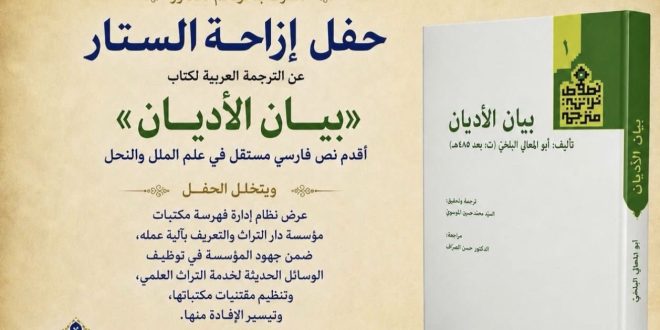
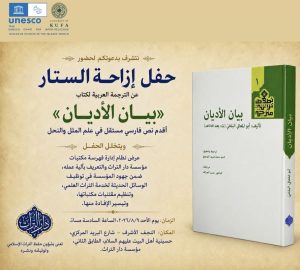
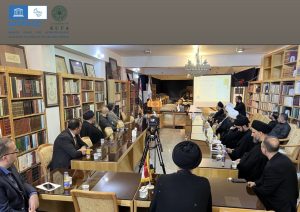
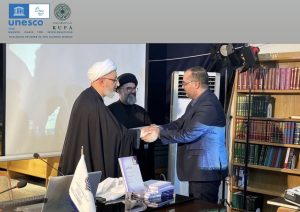
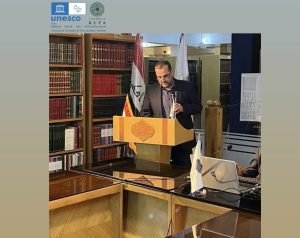
A member of the UNESCO Chair for Dialogue, Eng. Dr. Hassan Zuhair Al-Sarraaf, participated in the review and editing of a heritage volume on the history of religions, published by Dar Al-Turath Foundation in Najaf al-Ashraf. He also delivered a speech on the book and its significance during the unveiling ceremony held on 9 August 2026 at the premises of Dar Al-Turath Foundation.
The ceremony, attended by a distinguished gathering of scholars from the Najaf seminary and universities, as well as researchers and those with an interest in the scholarly heritage, featured remarks by Hassan Al-Sarraaf on the newly published work: Bayān al-Adyān (An Account of Religions) by Abu al-Maʿālī al-Balkhī, who died sometime after 485 AH.
Al-Sarraaf noted that the work is regarded as the earliest extant independent Persian text devoted to the study of religious communities, sects, and doctrines (al-milal wa al-niḥal), and that it is being translated into Arabic for the first time. He further explained that Bayān al-Adyān constitutes a precious historical record, documenting the beliefs of peoples prior to Islam and during the early Islamic centuries. It also predates al-Shahrastānī’s renowned Kitāb al-Milal wa al-Niḥal by thirty-six years.
In his address, Hassan Al-Sarraaf emphasized:
“Historical documentation of the nature of religious beliefs constitutes an important undertaking, given the abundance of its scholarly and intellectual benefits for understanding the course of the development of human thought and for discerning the cultural and civilizational foundations of peoples. It likewise contributes to building bridges of constructive dialogue, strengthening the values of peaceful coexistence, and approaching the points of convergence and divergence among diverse faith traditions with objectivity and scholarly rigor.
Beyond its intellectual significance, such documentation carries tangible social benefits: it can foster coexistence and diminish intolerance by cultivating a deeper understanding of the beliefs of others and the place those beliefs occupy in the hearts and lives of their adherents. It also activates dialogue as a means of facilitating shared intellectual exchange among the diverse cultures of the contemporary world.
This, beyond doubt, embodies the path of moderation and tolerance, and the call to fraternity, championed by the Hawza of Najaf al-Ashraf and its highest religious authority.”